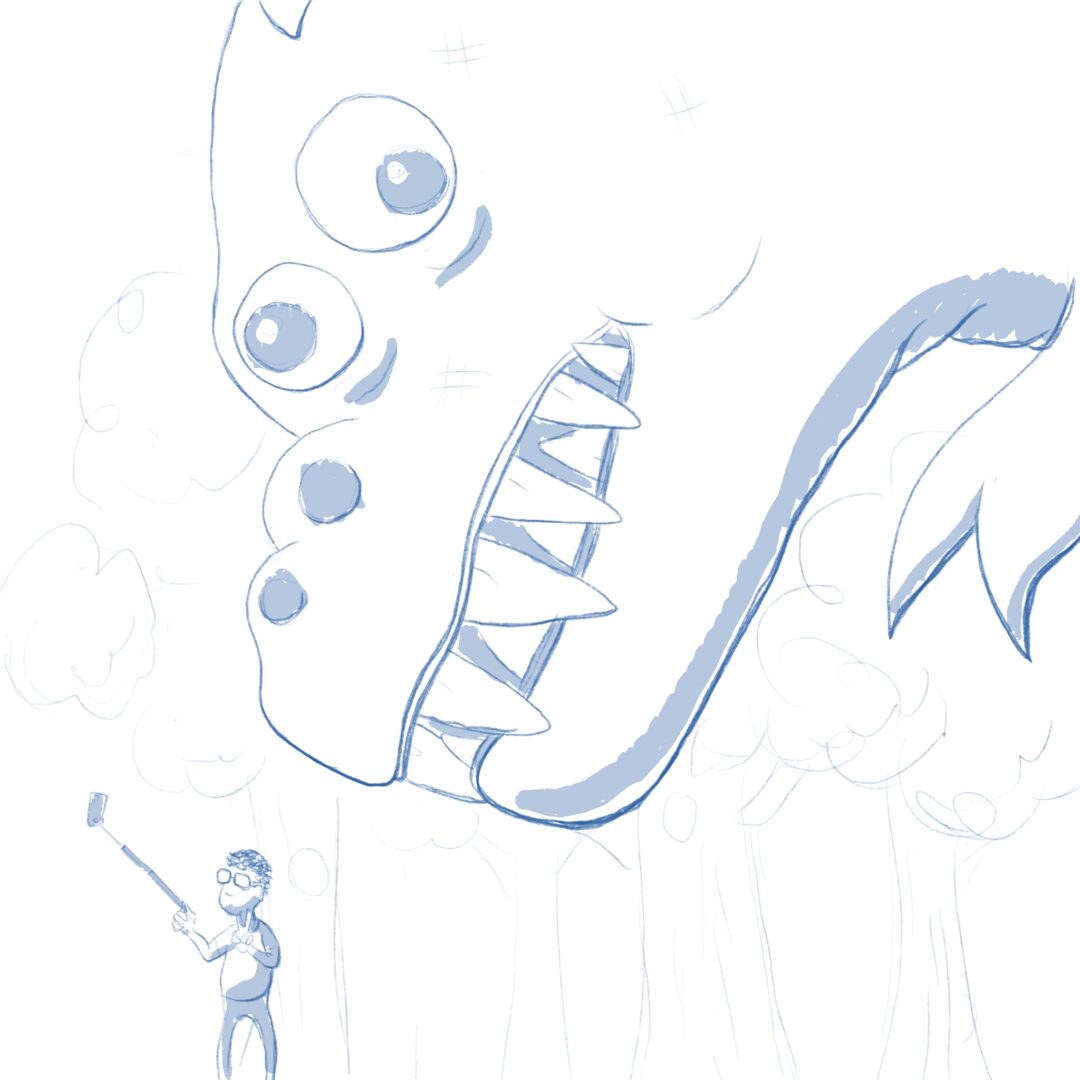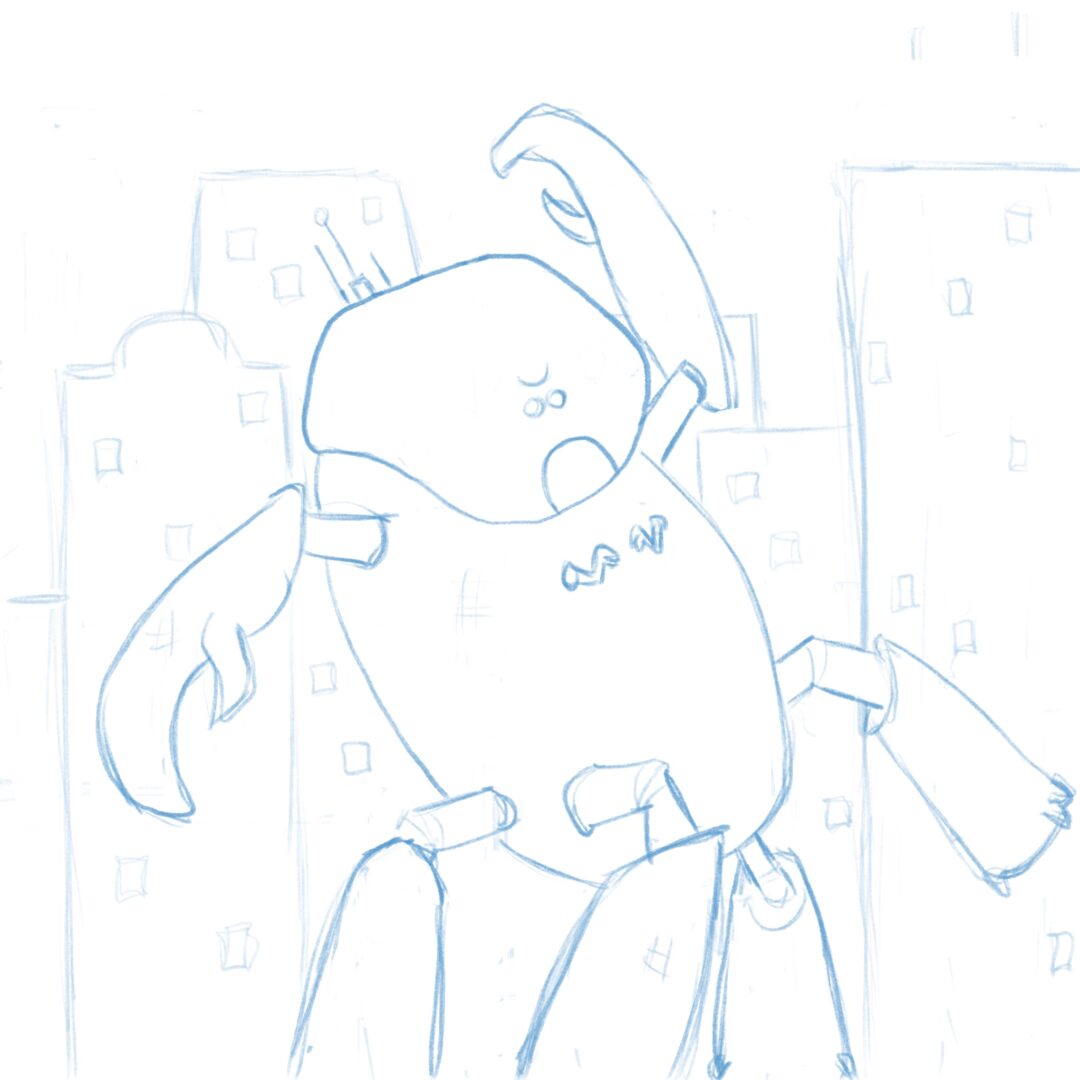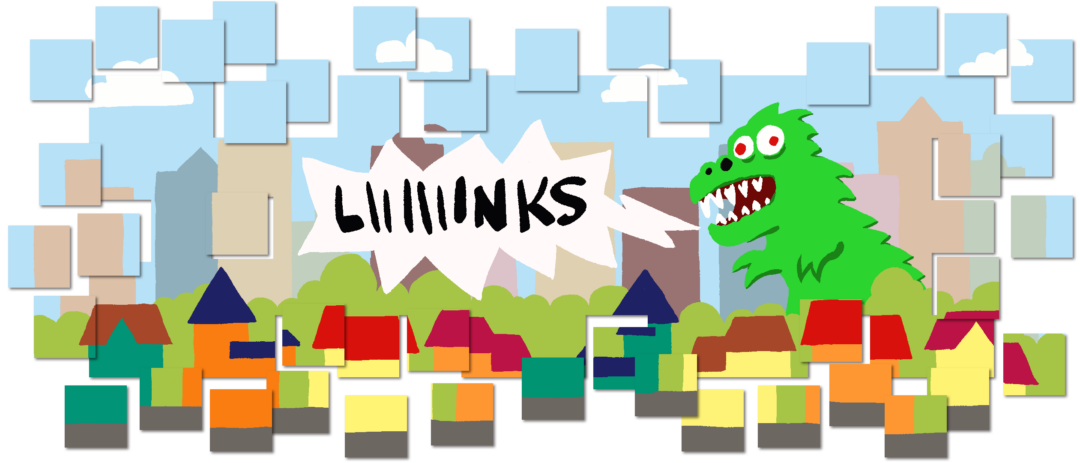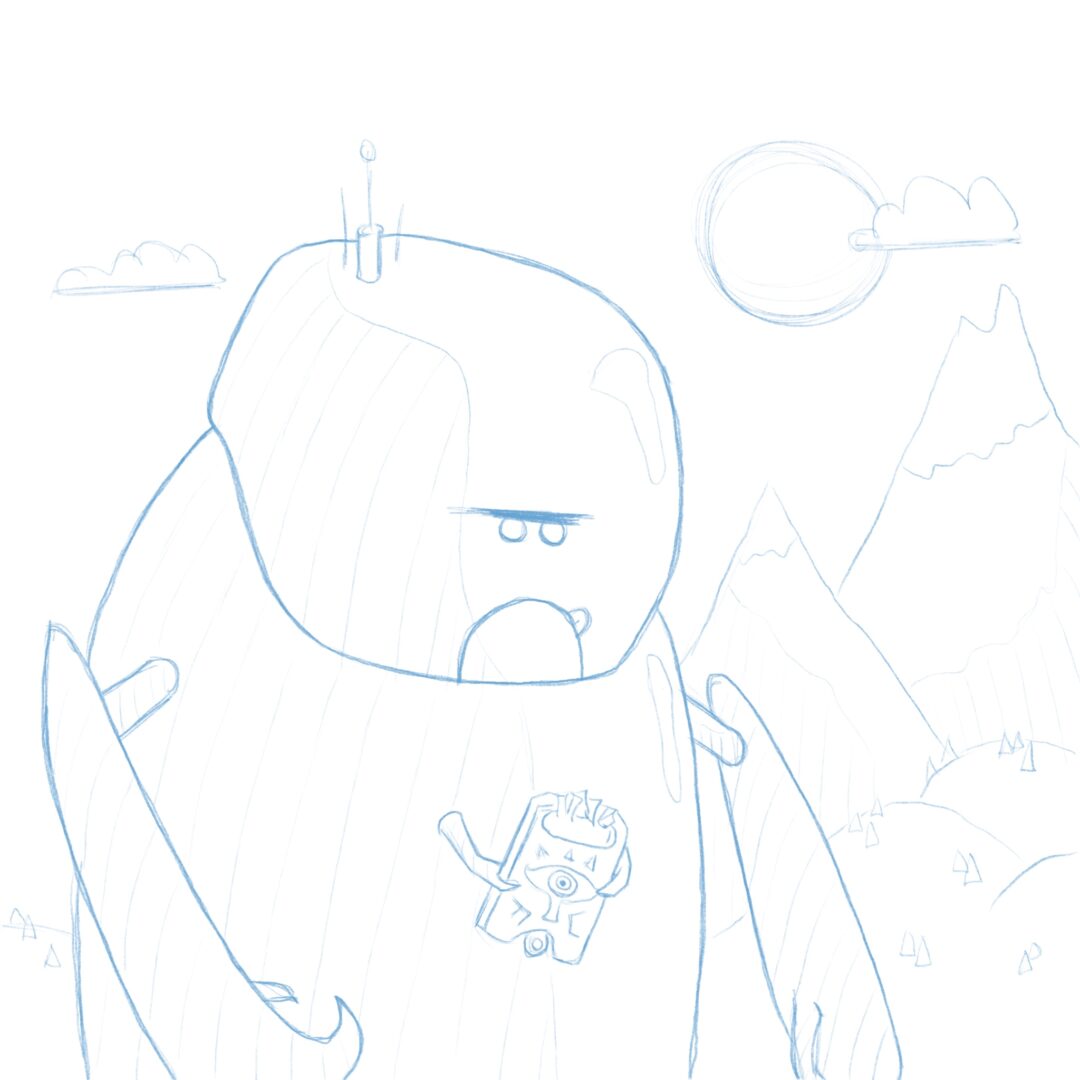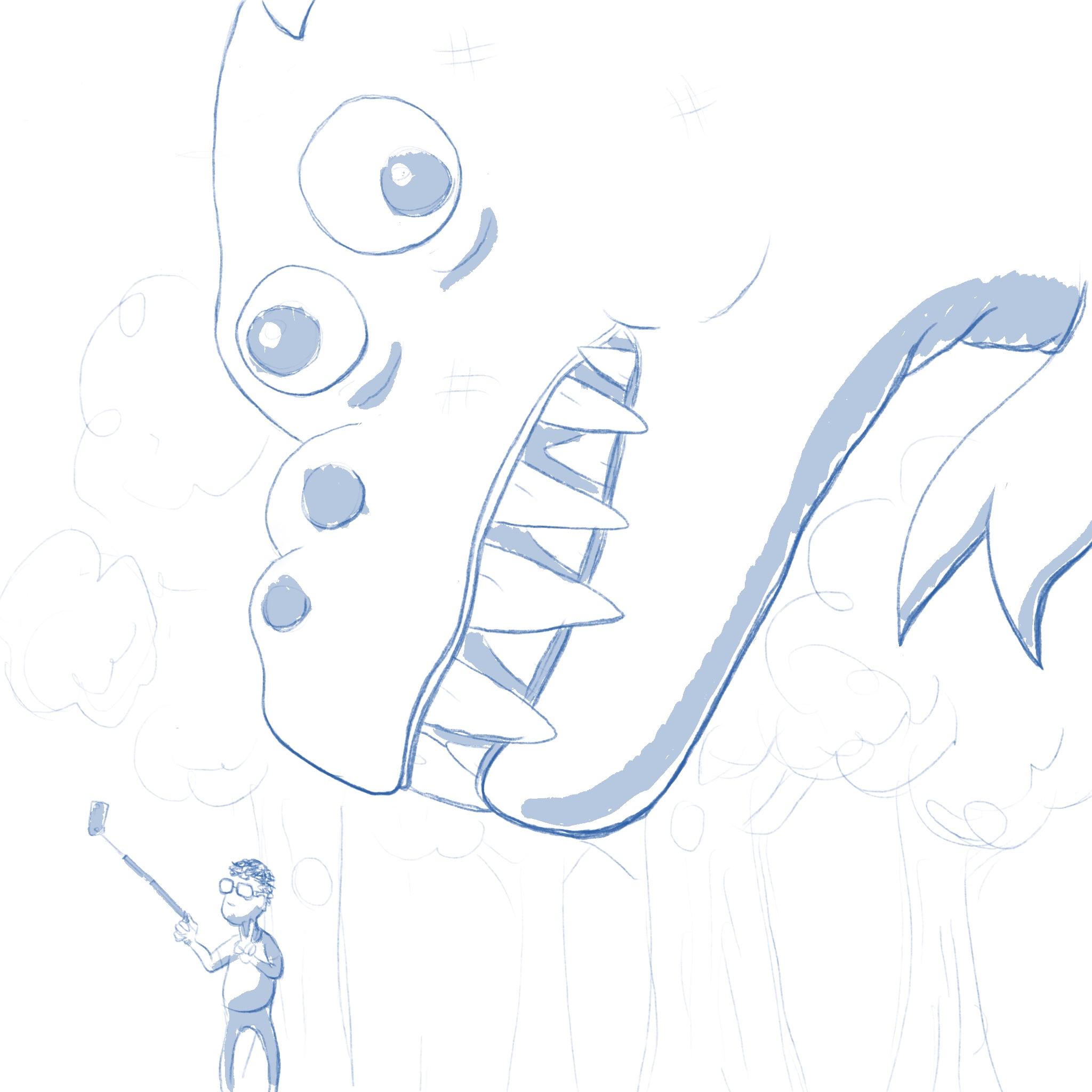
One of the two creatures depicted above is Garmegula, a giant monster I made up many years ago because I wanted to write some very short allegories about very tall monsters. Now he is the mascot of this site, in part because he staggers ever onward despite reeeally not having it together. It’s a quality I feel very much at home conveying. I think you can probably relate.
Of course, when you or I are upset we don’t take it out on the structural supports of human society. In my opinion that’s what distinguishes us from kaiju. And since kaiju are just people dressed up in costumes, pretending to be bigger than everyone else… well, you can see how I got started with the allegory thing.

I think Garmegula’s lineage in popular culture must be pretty obvious. In fact, if you’d asked me a couple weeks ago what I was trying to capture when doodling him, I would have told you “obviously golden-age Godzilla, I’m not even trying to hide it.”
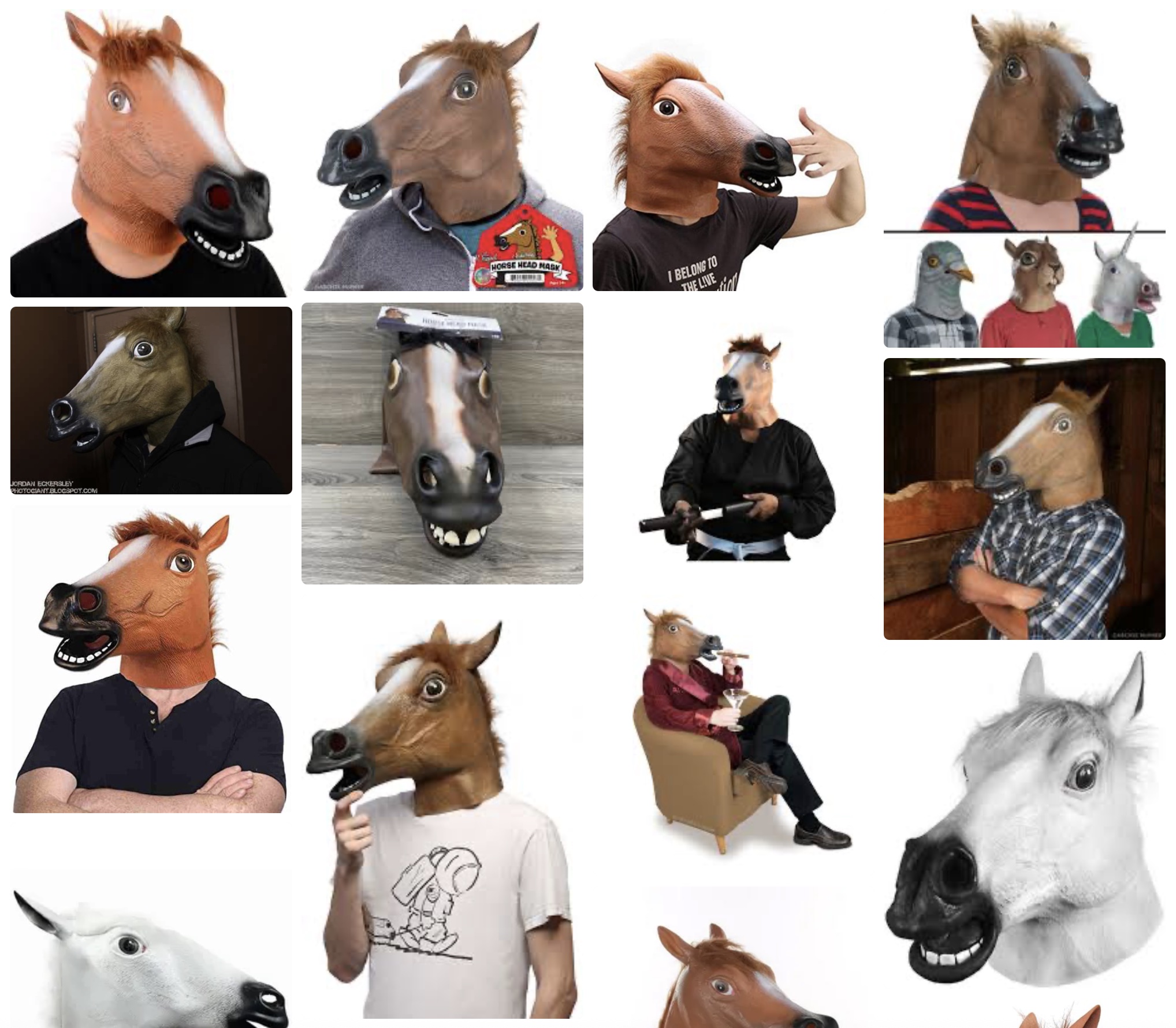
But then, while at work on the drawing I used to accompany my interview with C.Q. Lucius, I started looking up references for how Garmegula’s head might look when looming over the viewer’s perspective. I couldn’t find what I wanted until it finally occurred to me that Godzilla, whose energy is pretty stern and serious, was not at all what I had been subconsciously reaching for. Oh no, dear readers.
No indeed.
I had two drawing classes in the course of my formal education, and I have pursued it as a hobby intermittently over the intervening years. But I didn’t learn how to make good use of references until I got to know the lovely people of Helioscope Studio. When I lived in Portland, in the decade preceding this one, I got invited to visit their office once by my kind friend Erika Moen and thereafter took any excuse I could to return. Sometimes that meant their life drawing practice nights; other times it just meant hanging out at lunch to absorb their knowledge in conversation.
Besides comprising a kind and thoughtful group of people with a density of talent that is making me reach for analogies to neutron stars, Helioscope is an inspiring collective success story. There aren’t a lot of studios that are going strong as independent artist cooperatives after 24 years!
A significant part of that, I think, is the dedication their members have to sharing and teaching their skills in community. The Helioscope mentorship program is kind of legendary. I was never in that program, of course, but I caught a bit of the odd demo or presentation that the working artists held for the benefit of their interns. It was always so cool. But I also got to peek in on members of the studio teaching each other things in practice over a drafting table. And of course, they also worked together on reference shots.
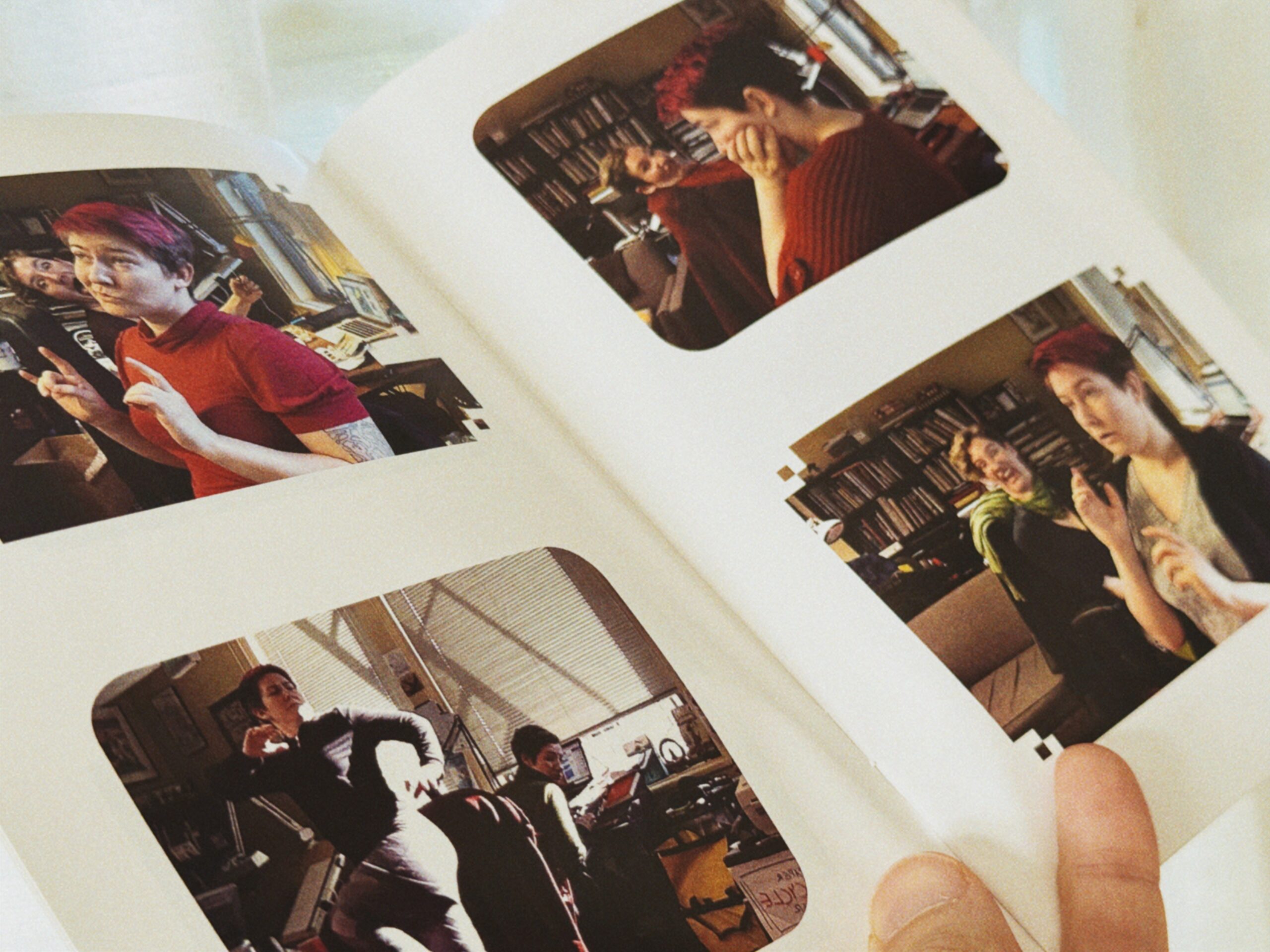
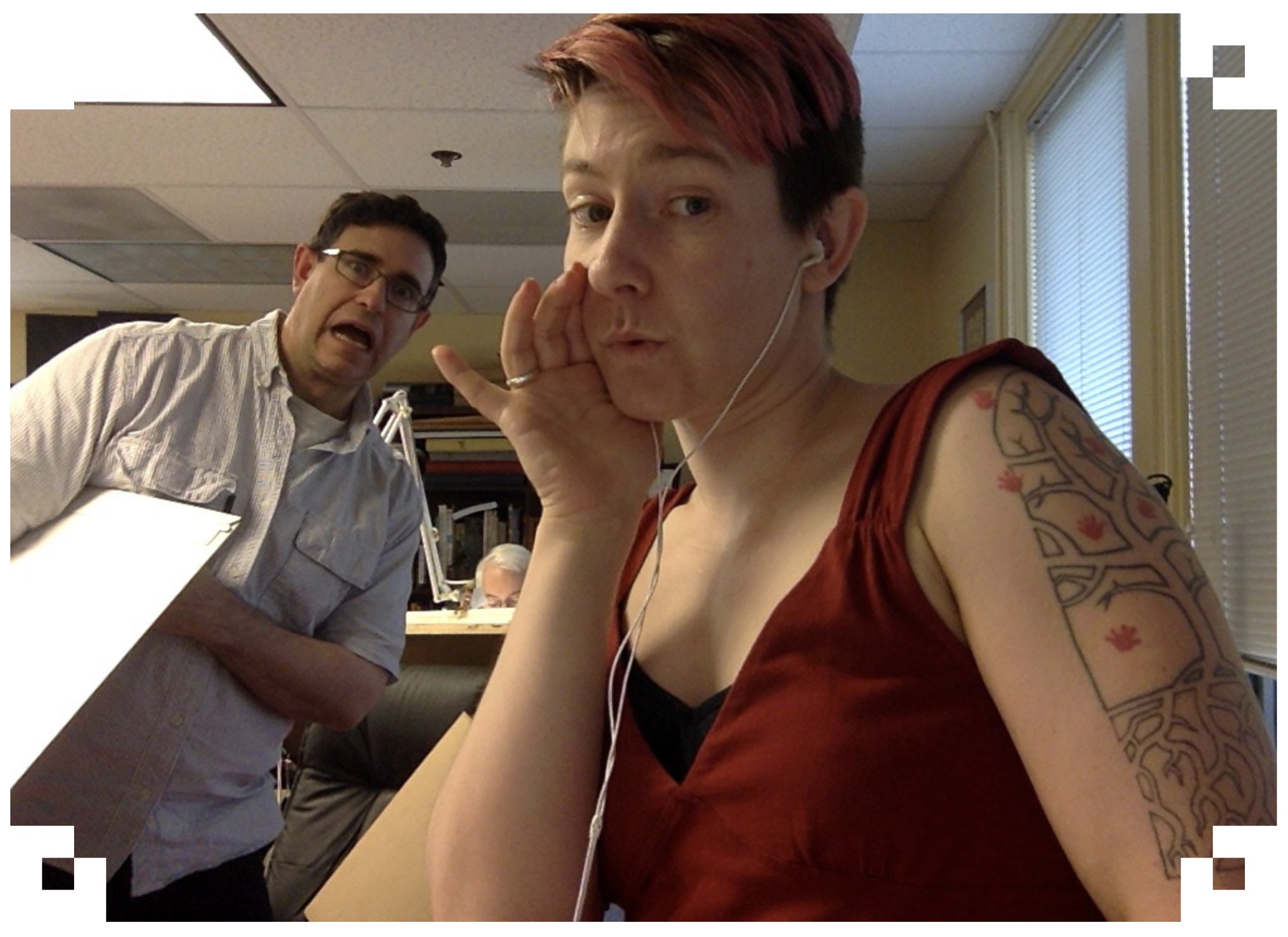
The photo above depicts a zine that Erika and the mighty Lucy Bellwood made, back in the halcyon 2010s. It collects some of the many occasions when Erika was taking a reference selfie and Lucy, being Lucy, photobombed it. They called the collection “Bombshells,” and you can get your own copy on Lucy’s Patreon.
I love this zine because it captures a moment in time between two artists who are very dear to me. I also love it because it shows one way of using playfulness and humor to bridge the space between friends working in parallel. The zine wasn’t planned as a creative exercise—its contents weren’t planned at all. But because the two of them were awake to the possibility of collaboration, it became one after the fact. Emergent magic.
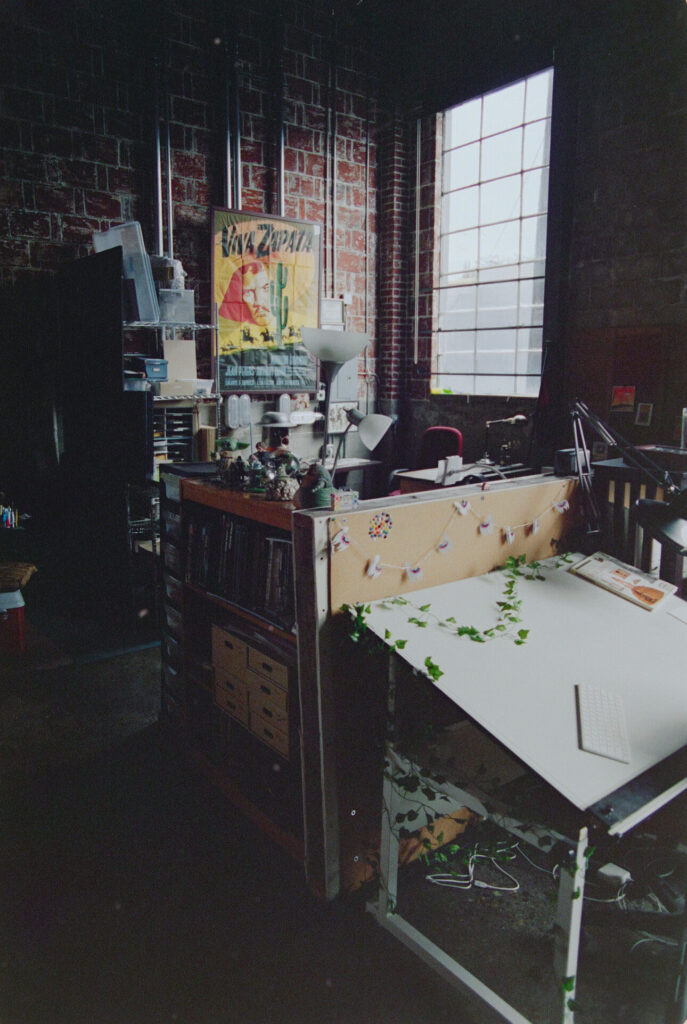
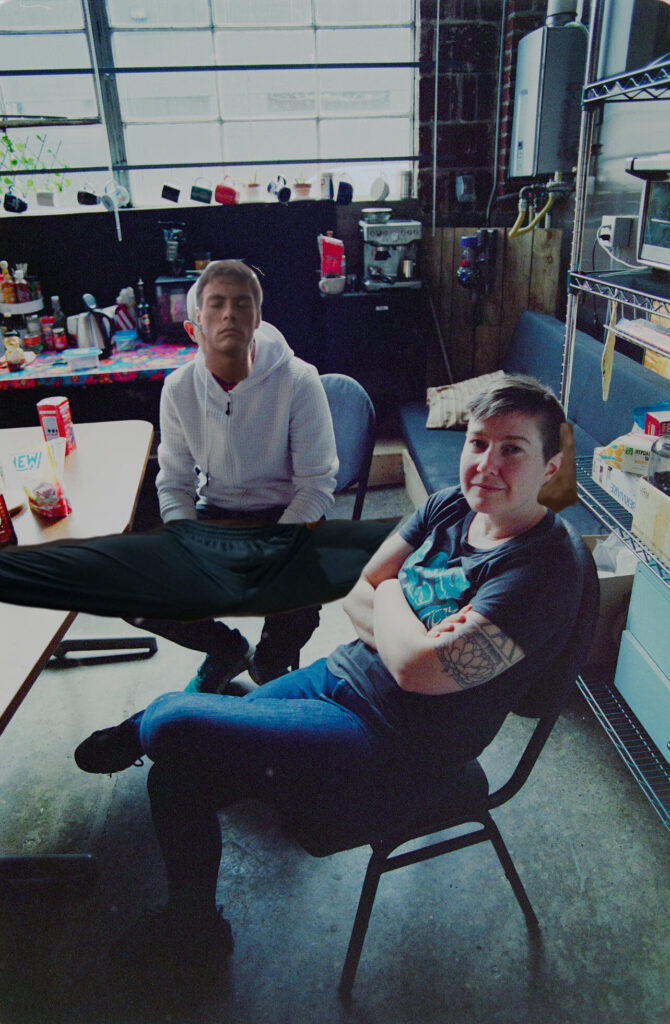
Erika and Lucy (now a member-at-large) made all those silly faces in the old studio, the one I knew from my time in Portland. Since then Helioscope has moved into a stunning space that I’m told was once used to repair school buses. When I visited Portland again last fall, I got to spend a beautiful afternoon with Erika and her husband, the talented and handsome Matthew Nolan. They let me peek inside the newer location and shoot some film of their sweet faces there. That was a good day.
But back to the teaching practice that is a core part of Helioscope’s model. Erika just posted a partial transcript of her presentation “Making Info-Heavy Comics” over on her Patreon. It’s a great example of those mentorship-program talks, but it’s also just full of good advice and helpful reframings! I am no one’s intern, but I like drawing and cartooning, and I could spend the rest of my life learning from comics artists like these.
It’s not only Erika who makes this kind of material available, of course. You can learn about, say, the comics coloring process from the redoubtable Dylan Meconis, who has been the star of many reference photos herself. That link goes to Steve Lieber’s tumblr, where you can get all kinds of useful lessons—I’m thinking right now of this crucial context for an old visual shorthand collection. Steve also does free portfolio reviews for artists who are starting out, both at conventions and at the comic shop Books With Pictures.
One of the great legacies of art teaching belongs to the late Jesse Hamm, a longtime member of Helioscope. I didn’t know Jesse well; I wish I had. My admiration for the way he perceived comics, and for the way he could break down and convey that perception to any audience, has only grown in the years since his passing.
Jesse wrote tons of tutorials and advice and gave it away online for free, first on Livejournal and then on Twitter. But he also collected that material into a series of zines and textbooks that you can buy for yourself, with the money now going to support his family. (I used a couple of his tips just this morning. Thanks, Jesse.)
Artists need to make money from their labor, just like anyone else who’s not a kaiju, but one striking quality about groups like Helioscope is their quiet but concrete stance against creative scarcity. They sell their work, sure. They also give of their time and knowledge freely, because they know firsthand that the path art takes through our lives is nonlinear.
More artists using your lessons to make better comics doesn’t mean less money extracted from your customers, it means a wider comics audience for everyone. I wish you could see how hard I am working not to use the word “capitalism” here. Wait, crap. Well anyway.
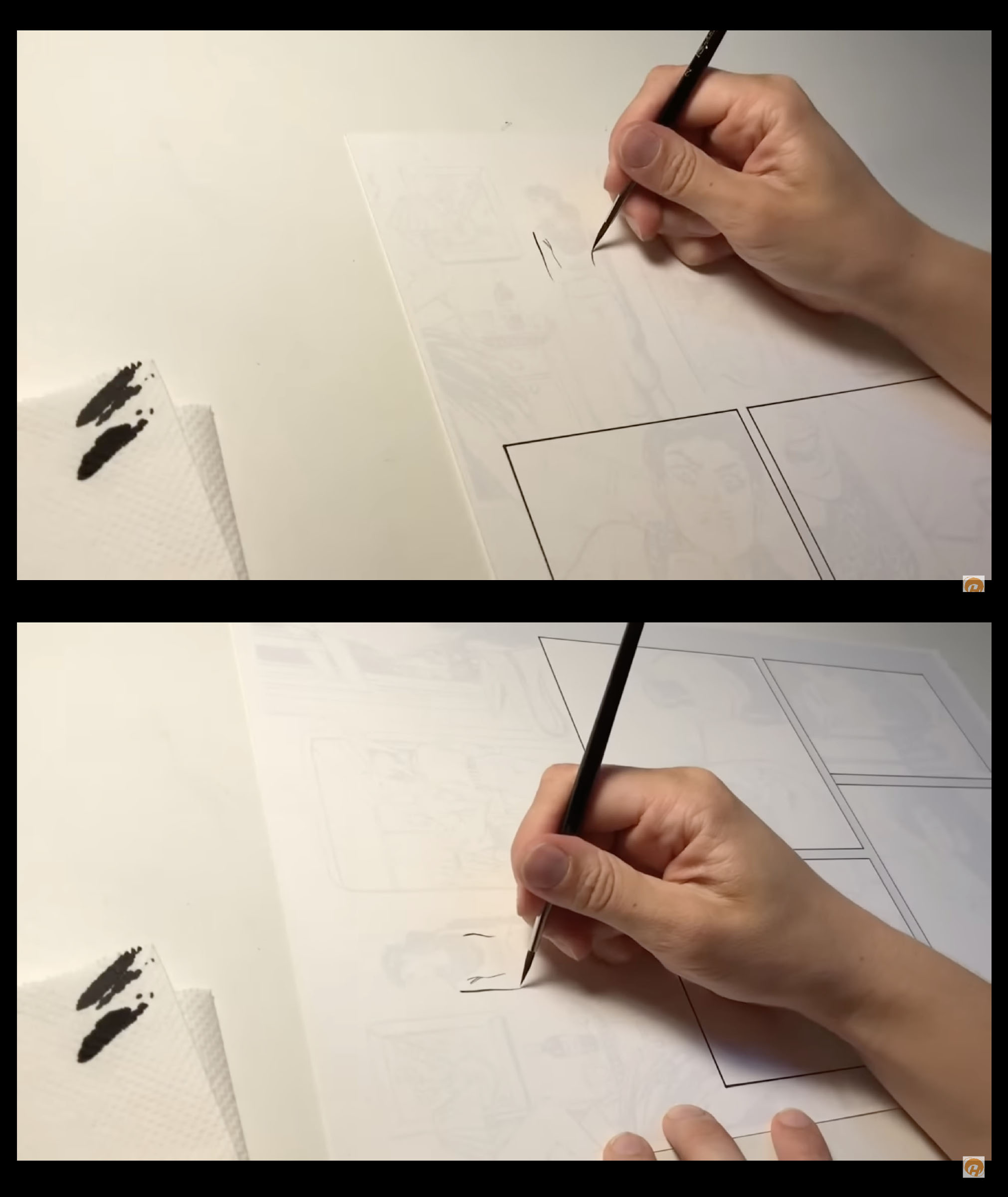
Helioscope has a delightful YouTube channel with a whole playlist of comics advice, made by many people but managed (I think) by the brilliant Leila del Duca. She herself has a tutorial on brush inking in another video collection, with a great example of the title I used for this post: when you’re working with a tool that takes time to dry, you don’t want to smear your hand through it. So turn the paper as you go.
It’s a simple tip but it encapsulates a lot for me. The physical nature of media changes the method of work, just as the art changes the medium. An artist can depict an endless number of things with line and value, but artists are animals, and can improve their line quality by following the natural rotation of the wrist. (This is true if you’re drawing on a tablet, too!) There is so much to gain by way of a simple change to your frame of reference. You just have to watch and listen to the people who create the work that speaks to you.
Someday I am going to have to write a follow-up to this essay about digital communities, inspired by Sophie telling me about learning AOL zine layout tricks in middle school from other kids online. But this thing is already like 1400 words long so let’s put Matt and Erika in here again to help me segue to a conclusion.
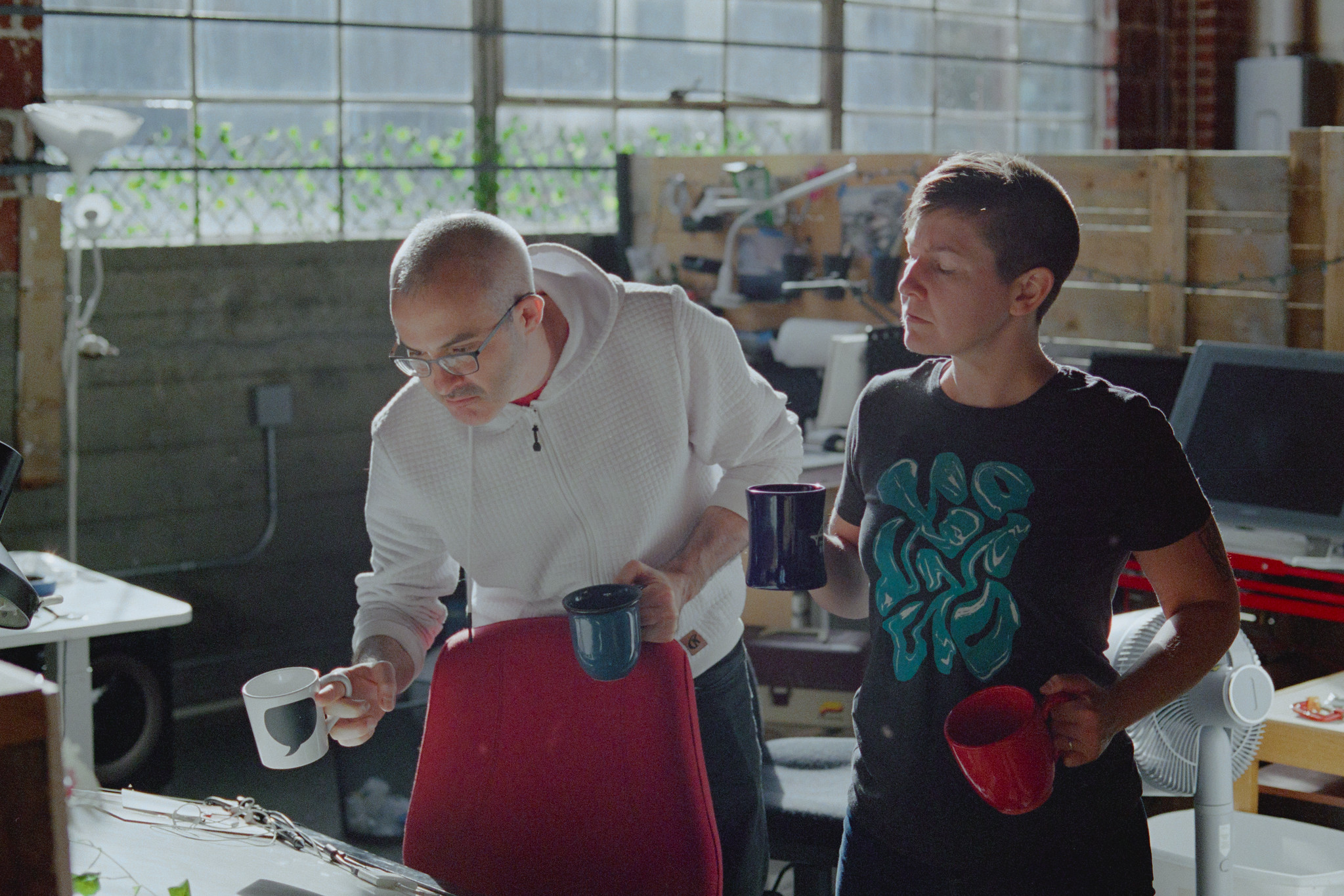
Monsters like Garmegula are going to keep trying to stomp through our lives. You and I are going to have to keep picking up the pieces and making new things out of them. Communities of creation and skill, the kind that span generations through shared love for fulfilling work, are necessary for people to thrive together—not just for those within them, but all of us adjacent to them too. That’s hardly news, but it always matters. I’m Brendan from Kaijuville. Let’s help each other not get stepped on today.